 Deutsch
 العربية
 中文
 Français
 English
 Español
 Italiano
 Türkçe
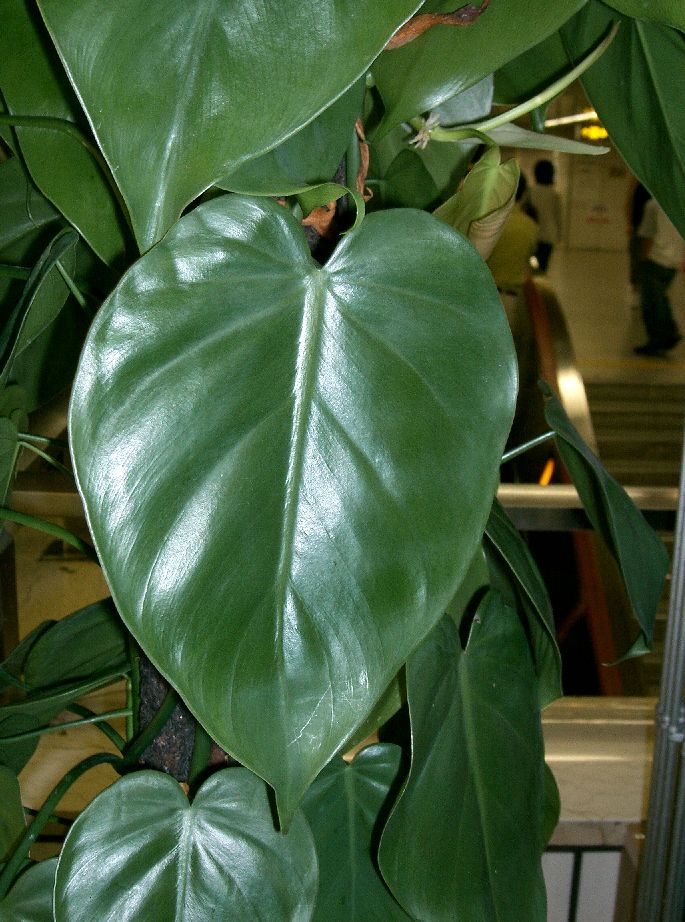
Heartleaf Philodendron
Philodendron hederaceum · Houseplant
A fast, trailing vine with soft, heart-shaped leaves. It is one of the easiest houseplants to keep: it tells you when it is thirsty by drooping, recovers quickly after watering, and roots from cuttings in a glass of water.

💧WaterEvery 7–10 days, when top 1–2 in is dry (estimated)
☀️LightMedium to bright indirect light
🐾PetsToxic to cats and dogs
Care at a glance
- Light
- Medium to bright indirect light
- Water
- When the top 1–2 in of soil is dry
- Soil
- Standard potting mix with perlite, pH 5.5–6.5
- Temperature
- Best 65–80 °F; keep above 55 °F
- Pot size
- Increase 1–2 in in diameter per repotting
- Pot
- Hanging basket or shelf pot with drainage
- Growth
- Fast; vines grow several feet a year (estimated)
- Lifespan
- Many years
When?
Repot in spring or summer when roots fill the pot. Take cuttings any time in the warm months; each needs at least one node.
Step by step
- Hang or place where vines can trail, in bright filtered light.
- Water when the top 1–2 in is dry and let excess drain.
- Feed monthly in spring and summer with balanced fertilizer.
- Pinch back long vines to keep the plant bushy.
- Root the trimmings in water and plant them back for a fuller pot.
- Wipe or rinse leaves now and then.
- Repot every 1–2 years.
Common problems
Small leaves, long bare stemsToo little light; move closer to a window and pinch back.
Yellowing leavesOverwatering; let the soil dry more between waterings.
Curling brown leavesUnderwatering or dry air; water more regularly.
Pets
Toxic to cats and dogs; chewing leaves causes mouth irritation, drooling and vomiting. If in doubt, ask your vet.
Related tools
Similar plants
Sources
This page is general guidance; no pesticide doses are given.