 Deutsch
 العربية
 中文
 Français
 English
 Español
 Italiano
 Türkçe
Lavender
Lavandula angustifolia · Herb
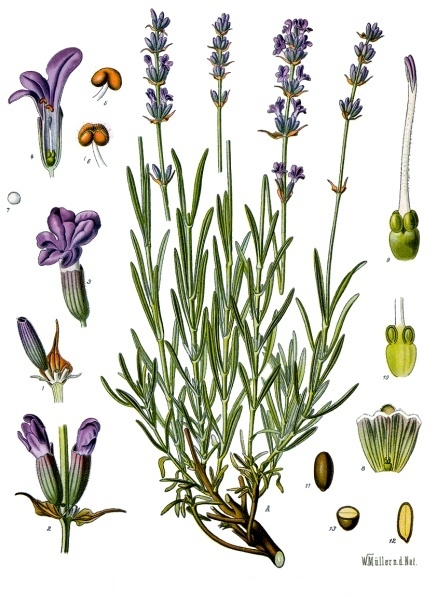
A fragrant Mediterranean shrub grown for its purple flower spikes and silvery leaves. It loves sun, heat and poor, dry soil; rich soil and wet feet are what usually kill it. Bees and butterflies visit it all summer.

💧WaterWeekly first season, then only in drought (estimated)
☀️LightFull sun, 6–8 hours
🐾PetsToxic to cats and dogs
Care at a glance
- Light
- Full sun, at least 6–8 hours
- Water
- Deeply but rarely once established
- Soil
- Lean, very well-drained, pH 6.5–7.5
- Temperature
- Hardy to about 0 °F (English types); dislikes humid heat
- Spacing
- 18–24 in apart
- Container
- At least 12 in wide with drainage, terracotta ideal
- Bloom
- Blooms early to mid summer
- Lifespan
- 5–10 years
When?
Plant young plants in spring after the last frost, or in early fall in mild climates so roots settle before winter. Seeds are slow and uneven; nursery plants are easier.
Step by step
- Pick the sunniest, best-drained spot; raise the bed or add grit on heavy soil.
- Plant at the same depth as in the nursery pot.
- Water regularly the first season, then only in long dry spells.
- Skip rich fertilizer; a little compost at planting is enough.
- Harvest stems when the first flowers open for the best scent.
- Trim by about a third after flowering, never into old bare wood.
- In pots, move to a sheltered spot in hard winters.
Common problems
Gray, mushy baseRoot rot from wet soil; improve drainage and water less.
Woody, sprawling plantMissed annual pruning; trim lightly each year after bloom.
Few flowersToo much shade or fertilizer; move to full sun and stop feeding.
Pets
Listed as toxic to cats and dogs; eating larger amounts can upset the stomach. Concentrated oils are a bigger concern than the plant. If in doubt, ask your vet.
Related tools
Similar plants
Sources
This page is general guidance; no pesticide doses are given.