 Deutsch
 العربية
 中文
 Français
 English
 Español
 Italiano
 Türkçe
Sage
Salvia officinalis · Herb
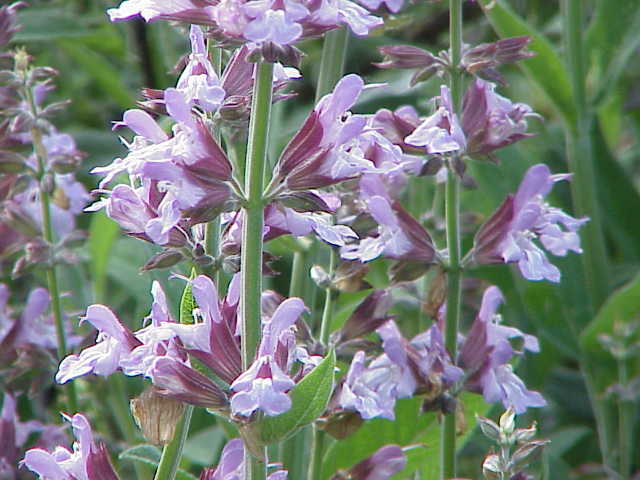
A shrubby herb with soft, gray-green leaves and a warm, earthy flavor. Like other dry-climate herbs it wants sun, sharp drainage and restraint with the watering can. A plant stays productive for several years before getting woody.

💧WaterWhen soil is dry 1–2 in down, about weekly (estimated)
☀️LightFull sun, 6–8 hours
🐾PetsNon-toxic
Care at a glance
- Light
- Full sun, 6–8 hours
- Water
- When the soil is dry 1–2 in down
- Soil
- Light, well-drained, pH 6.0–7.0
- Temperature
- Best 60–80 °F; most types hardy to about 0 °F (estimated)
- Spacing
- 18–24 in between plants
- Container
- At least 2 gallons, 10 in deep
- Harvest
- Light harvests from the first summer
- Lifespan
- Perennial; replace every 4–5 years
When?
Plant out in spring after the last frost. Seeds can be started indoors 6–8 weeks earlier, though cuttings or young plants give a faster start (estimated).
Step by step
- Sow seeds 1/8 in deep or root 3–4 in cuttings in a gritty mix.
- Plant in full sun in light soil; add grit to heavy clay.
- Water young plants regularly, then only when the soil dries.
- Feed very lightly, if at all; lean soil gives stronger flavor.
- Harvest leaves as needed, taking no more than a third at once.
- Cut back by about a third in spring to keep plants compact.
- Replace plants once they become very woody and sparse.
Common problems
Wilting with wet soilRoot rot; improve drainage and water less.
White powdery leavesPowdery mildew; give more space and sun.
Woody, bare centerAge or lack of pruning; prune each spring or start new plants.
Pets
Listed as non-toxic to cats and dogs. Large amounts may upset the stomach. If in doubt, ask your vet.
Related tools
Similar plants
Sources
This page is general guidance; no pesticide doses are given.