 Deutsch
 العربية
 中文
 Français
 English
 Español
 Italiano
 Türkçe
Fig tree
Ficus carica · Tree/Shrub
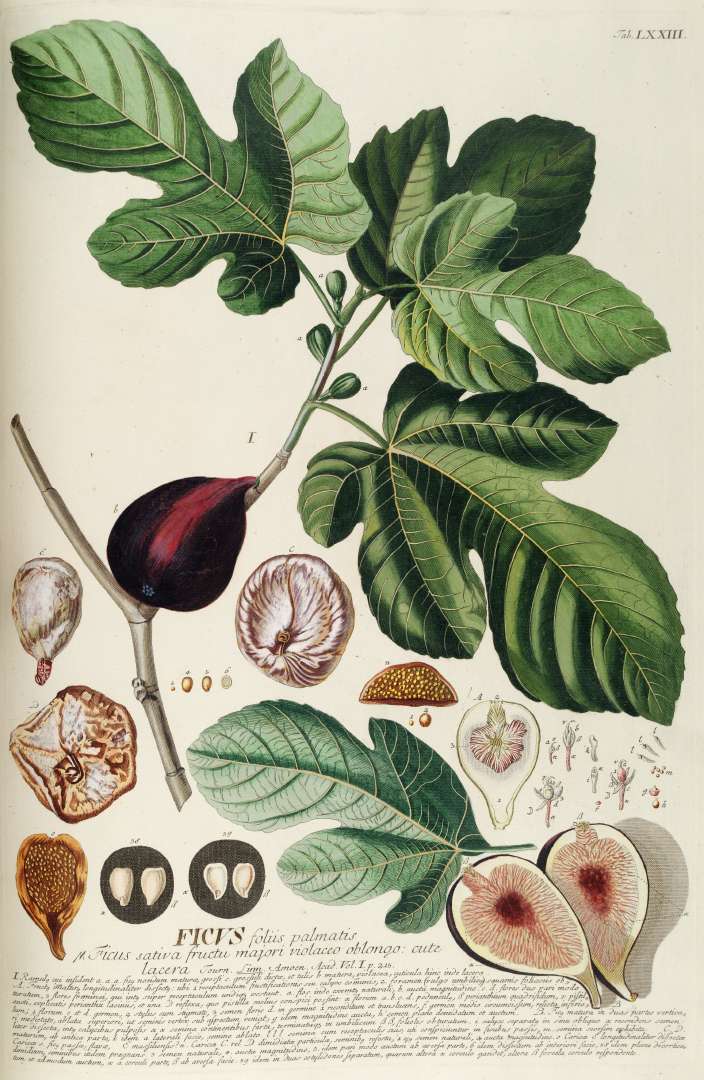
A Mediterranean fruit tree with large lobed leaves and sweet, soft fruit. Most garden varieties set fruit without pollination. It loves heat, tolerates poor soil and grows well against a warm wall or in a big pot.

💧WaterDeeply once a week in fruiting season (estimated)
☀️LightFull sun, 8 hours
🐾PetsSap and leaves harmful
Care at a glance
- Light
- Full sun, 8 hours if possible
- Water
- 1 in per week while fruiting; drought tolerant once settled
- Soil
- Well-drained, even stony soil; pH 6.0–7.5
- Temperature
- Best 70–95 °F; wood hardy to about 10–15 °F
- Spacing
- 10–20 ft, or train flat against a wall
- Container
- 15–20 gallons, roots restricted for more fruit
- Harvest
- Summer to autumn, 1–3 years after planting (estimated)
- Lifespan
- 50+ years (estimated)
When?
Plant in spring after hard frosts, or in autumn in mild climates. In cold areas grow in a pot you can move to a frost-free shed for winter.
Step by step
- Choose a self-fertile variety suited to your climate.
- Plant in the warmest, sunniest spot you have, ideally against a south- or west-facing wall.
- Restrict roots with a large pot or a lined planting pit; free roots mean leaves, not figs.
- Water deeply during fruit swelling; irregular watering splits fruit.
- Feed lightly in spring only; heavy feeding reduces fruit.
- Prune in late winter to remove crossing or frost-damaged wood and keep an open shape.
- Pick figs when they soften, droop on the stalk and a drop of nectar appears at the eye.
- In cold regions wrap or move the tree indoors before hard frost.
Common problems
Fruit drops while small and greenDry roots or a young tree; water steadily, it improves with age.
Fruit splitsHeavy rain or watering after drought; keep moisture even.
Rust-colored spots on leavesFig rust; rake up fallen leaves, improve airflow.
Birds and wasps eat ripe fruitNet the tree or pick a little early.
Pets
Leaves and milky sap are harmful to cats and dogs and can irritate skin and mouth. If in doubt, ask your vet.
Similar plants
Sources
This page is general guidance; no pesticide doses are given.