 Deutsch
 العربية
 中文
 Français
 English
 Español
 Italiano
 Türkçe
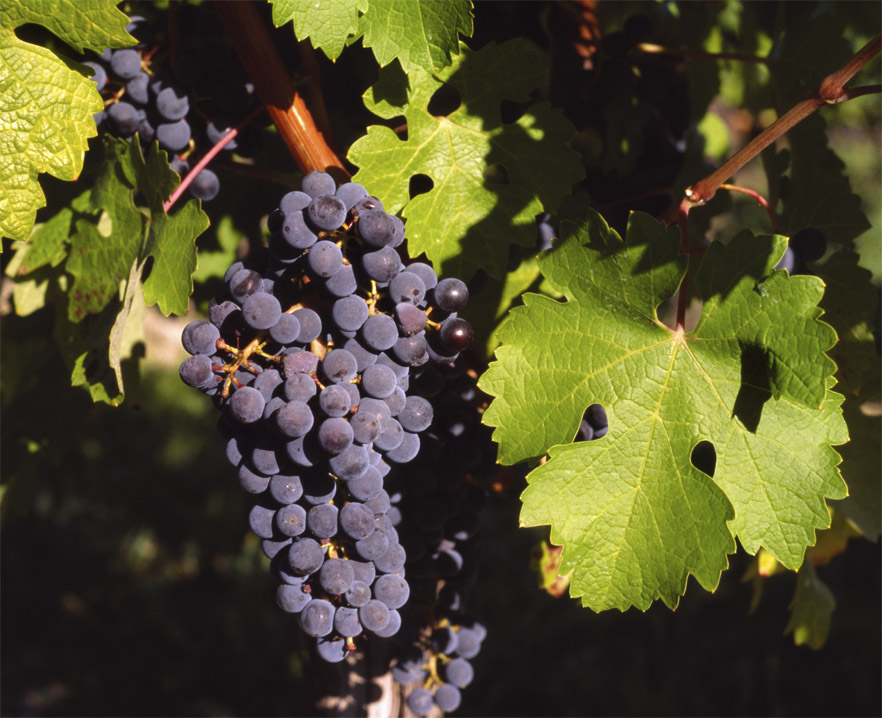
Grapevine
Vitis vinifera · Tree/Shrub
A long-lived woody climber grown on a trellis, pergola or wall for fruit and summer shade. It needs sun, good drainage and firm winter pruning to crop well.

💧WaterDeep, infrequent once established (estimated)
☀️LightFull sun
🐾PetsFruit toxic to pets
Care at a glance
- Light
- Full sun, 7–8 hours
- Water
- Deeply while young; established vines need little extra
- Soil
- Deep, well-drained, moderately fertile, pH 6.0–7.0
- Temperature
- Needs warm summers; most varieties hardy to about 0 °F
- Spacing
- 6–8 ft between vines, rows 8–10 ft
- Container
- At least 15–20 gallons, with sturdy support
- Harvest
- Late summer to autumn; first crop in year 3 (estimated)
- Lifespan
- Perennial; can live 50+ years
When?
Plant dormant bare-root vines in late winter to early spring, or potted vines in spring after hard frosts (estimated).
Step by step
- Build a strong trellis or pergola before planting.
- Soak bare roots for a few hours, then plant at the nursery depth.
- Cut back to 2–3 buds after planting to build a strong root system.
- Train one main stem up the support in the first year.
- Prune hard each winter, keeping a few well-placed canes or spurs.
- Thin leaves around bunches in summer so fruit gets light and air.
- Pick when grapes taste sweet; color alone isn't a reliable sign.
Common problems
White powder on leaves and fruitPowdery mildew; improve airflow and prune for an open canopy.
Yellow patches on leaves with downy growth beneathDowny mildew; avoid wetting leaves and remove infected leaves.
Split or rotting bunchesUneven watering or crowded bunches; thin bunches and water evenly.
Birds or wasps eat fruitCover bunches with mesh bags.
Pets
Grapes and raisins are toxic to dogs and cats according to ASPCA; keep fallen fruit out of reach. If in doubt, ask your vet.
Similar plants
Sources
This page is general guidance; no pesticide doses are given.