 Deutsch
 العربية
 中文
 Français
 English
 Español
 Italiano
 Türkçe
Starting seeds indoors: from seed tray to garden
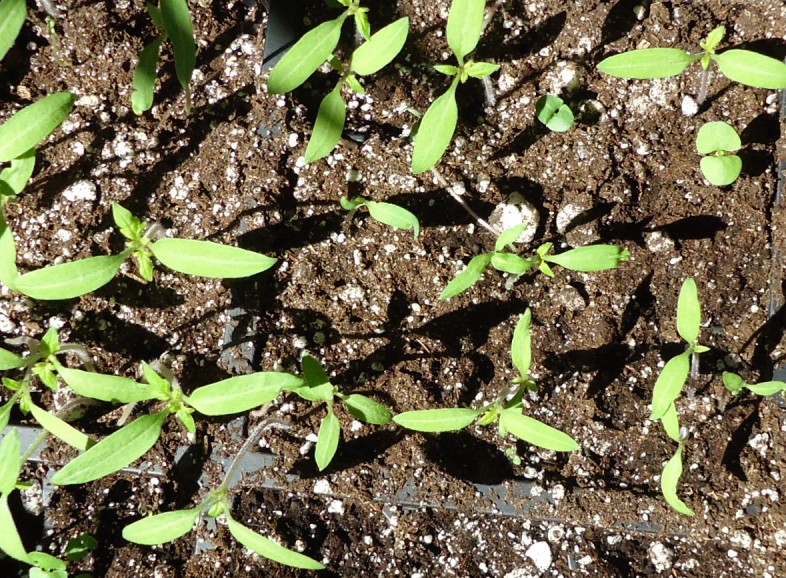
Raising your own seedlings is cheaper than buying plants and lets you grow the exact varieties you want. Success comes down to a few things: sowing at the right time, keeping seeds warm, then giving seedlings plenty of light and not too much water. This guide walks you from an empty tray to sturdy plants ready for the garden.
- Start time
- 2–10 weeks before the last frost, by crop
- Germination
- Most warm crops: 70–85 °F (estimated)
- Light
- 12–16 hours a day; a lamp beats a window
- Most common mistake
- Too little light and too much water
When to start: count back from the last frost
Every timing decision starts with one date: your area's average last spring frost. Count back from it by the number of weeks each crop needs indoors. Our Sowing calendar tool does this count for your location.
- Peppers and eggplant: 8–10 weeks before the last frost; they germinate and grow slowly.
- Tomatoes: 6–8 weeks before.
- Basil: about 6 weeks before.
- Lettuce: 4–6 weeks before; it can go out a little before the last frost.
- Cucumber and zucchini: only 3–4 weeks before; they grow fast and dislike root disturbance.
Starting too early is a common trap: seedlings outgrow their pots, stretch and get stressed before it is warm enough outside. When in doubt, start a week later, not earlier.
What you need
- Seed trays or cell trays: Plug trays with individual cells make transplanting easy. Clean, reused pots and yogurt cups work too, as long as they have drainage holes.
- Seed-starting mix: A fine, light, sterile mix. Do not use garden soil; it compacts and can carry disease.
- Labels and a pencil: Write the variety and sowing date. Many seedlings look identical.
- Light: A bright south-facing window, or better, an LED grow light or shop light.
- A clear lid or plastic wrap: Keeps humidity high until seeds germinate.
- A spray bottle and a tray without holes for bottom watering.
- Optional: A seedling heat mat with a thermostat for peppers and eggplant.

Sowing depth and germination temperature
A rule of thumb: sow a seed about two to three times as deep as it is wide. Tiny seeds are just pressed onto the surface. The values below are starting points (estimated); always check the seed packet.
Step-by-step sowing
The whole job takes less than an hour for a few trays:

- Moisten the mix: Put the seed-starting mix in a bowl and add warm water until it feels like a wrung-out sponge, damp but not dripping.
- Fill the cells: Fill each cell to the top, tap the tray to settle the mix and press lightly. Do not pack it hard.
- Sow: Make a hole at the right depth and drop in 2–3 seeds per cell. Large seeds like cucumber and zucchini: 1–2 per cell.
- Cover and label: Cover the seeds with mix (or press tiny seeds onto the surface) and add a label with the variety and date.
- Keep warm and humid: Cover the tray with a clear lid and place it somewhere warm. Seeds do not need light to germinate, but check them daily.
- Uncover at first sprouts: As soon as the first seedlings appear, remove the lid and move the tray under bright light the same day.
Light: window or lamp?
Seedlings that lack light grow tall, thin and pale, leaning toward the window. This stretching (legginess) cannot be reversed, so good light from day one is the most important factor after germination.
Windowsill
- Free, but winter and early spring days are short and light is weak.
- Use only the brightest south-facing window.
- Turn the tray every day so stems do not lean.
- Expect some stretching; a lamp is safer.
Grow light
- Even LED shop lights work well and use little power.
- Keep the lamp 2–4 in above the leaves and raise it as plants grow (estimated).
- Run it 14–16 hours a day on a timer; give plants a dark period at night.
- Sturdier, shorter, darker green seedlings.
Watering from below
Seedlings need evenly moist, never soggy, mix. The easiest way is bottom watering: pour about ½ in of water into a solid tray under the cells and let the mix soak it up for 15–20 minutes, then pour away what is left (estimated). This keeps the surface drier, which helps prevent damping off.
- Check daily by lifting the tray; a light tray needs water.
- The surface may look dry while the cells are still damp below.
- Use room-temperature water.
- A gentle fan on low for a few hours a day dries the surface and makes stems stronger.
⚠️ Constantly wet mix and stagnant air are the main causes of damping off. Water only when needed and never leave the tray standing in water.
Thinning and potting on
If you sowed more than one seed per cell, thin to the strongest seedling once the first true leaves appear. Snip the others at soil level with scissors rather than pulling them, which would disturb the roots.
Seedlings sown in an open tray, or outgrowing small cells, need potting on (pricking out) into individual pots about 3–4 in wide:
- Water an hour beforehand.
- Ease each seedling out with a pencil or plant label, keeping as much root as possible.
- Always hold seedlings by a leaf, never by the stem; a damaged leaf regrows, a crushed stem does not.
- Tomatoes can be planted deeper, up to the first leaves; they root along the buried stem.

Feeding seedlings
Seed-starting mix holds few nutrients. Once seedlings have one or two true leaves, they benefit from a light feed.
- Use a balanced liquid fertilizer at half the strength recommended for adult plants, about every 1–2 weeks (estimated). Follow the label of your product.
- Always feed into moist mix, never into bone-dry cells.
- Pale, yellowish seedlings in good light often just need feeding or potting on.
- More is not better: too much fertilizer burns roots and makes soft, sappy growth.
Hardening off and planting out
Indoor seedlings have never felt sun, wind or cold nights. Hardening off gets them used to the outdoors over 7–14 days (estimated):
- Days 1–3: 1–2 hours outside in shade, sheltered from wind.
- Days 4–7: Lengthen the time and add morning sun.
- Days 8–14: Full days outside; leave them out overnight if nights are mild.
Planting out: Wait until the frost risk has passed and the soil has warmed. Tomatoes, peppers, eggplant, basil, cucumber and zucchini want nights above about 50 °F (estimated). Plant on a cloudy day or in the evening, water well and keep the soil moist for the first week.
Common problems and fixes
Frequently asked questions
Can I use garden soil to start seeds?
It is best not to. Garden soil compacts in small cells, drains poorly and can carry disease-causing fungi. Use a fine, sterile seed-starting mix.
Do seeds need light to germinate?
Most vegetable seeds do not, but a few, like lettuce, germinate better with some light, so they are only lightly covered. Every seedling needs strong light as soon as it sprouts.
When should I move seedlings to bigger pots?
When they have one or two true leaves, or when roots appear at the bottom of the cell. Waiting too long slows growth.
Why are my seedlings tall and thin?
They are not getting enough light. Move them to a brighter spot or bring the grow light closer, and turn window trays daily.
How do I know seedlings are ready to plant out?
They have several true leaves, a sturdy stem and have been hardened off for 1–2 weeks, and frost risk has passed.
Crops to start from seed
Sources
- University of Illinois Extension — Starting from Seed Indoors (PDF)
- UConn Home & Garden Education Center — Seed Starting
- New Mexico State University — Indoor Seed Starting (PDF)
Last updated: 2 November 2026