 Deutsch
 العربية
 中文
 Français
 English
 Español
 Italiano
 Türkçe
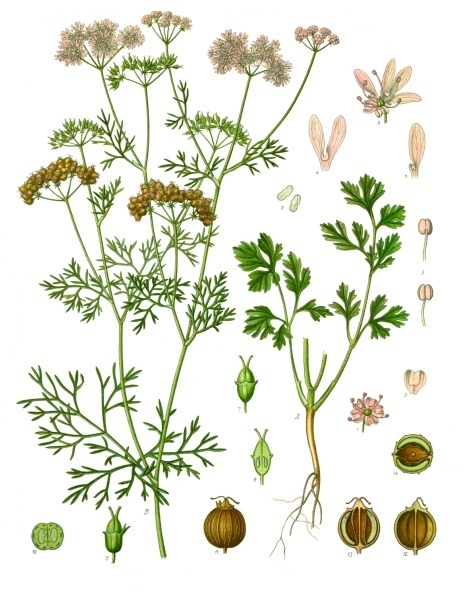
Coriander (Cilantro)
Coriandrum sativum · Herb
A fast herb grown for its fresh leaves and, later, its aromatic seeds. It runs to flower quickly in heat, so short, repeated sowings work best. Treat it as a quick crop rather than a long-lasting plant.

💧WaterKeep moist, check every 2 days in warm weather (estimated)
☀️LightSun, cool weather
🐾PetsNot toxic
Care at a glance
- Light
- Full sun in cool months; afternoon shade in summer
- Water
- Keep evenly moist; about 1 in per week
- Soil
- Light, fertile, well-drained, pH 6.2–6.8
- Temperature
- Best 50–75 °F; bolts quickly above 80 °F
- Spacing
- 6–8 in apart, rows 12 in apart
- Container
- At least 1 gallon, 8 in deep
- Harvest
- Leaves in 3–4 weeks; seeds in about 90 days (estimated)
- Lifespan
- Annual
When?
Sow from early spring until early summer, then again in late summer and fall. In mild-winter areas fall and winter sowings give the longest leaf harvest. Sow a small batch every 2–3 weeks (estimated).
Step by step
- Lightly crush the round seed husks to help them sprout.
- Sow directly 1/4–1/2 in deep; coriander dislikes being moved.
- Keep the soil moist; seedlings appear in 7–14 days.
- Thin seedlings so each has room to bush out.
- Start cutting outer leaves once plants are about 6 in tall.
- Avoid letting the soil dry out; stress pushes the plant to flower.
- Sow a fresh row every few weeks for a steady supply.
- Let a few plants flower and dry for seed or to self-sow.
Common problems
Plant flowers earlyHeat or long days; sow in cooler months and pick slow-bolting varieties.
Yellowing leavesWaterlogged soil or a lack of nutrients; improve drainage and feed lightly.
Aphids on new growthWash off with a strong spray of water; encourage ladybirds.
Pets
Coriander is not considered harmful to cats or dogs in normal garden amounts. If in doubt, ask your vet.
Related tools
Similar plants
Sources
This page is general guidance; no pesticide doses are given.